
DYNAMIC CORRELATIONS AND DISORDER IN THE MASTICATORY MUSCULATURE NETWORK

Nuove scoperte nel campo dei disturbi dell’Articolazione Temporo Mandibolare con l’uso di un Modello di Rete Anatomica.

Molte persone in tutto il mondo soffrono di disturbi dell’articolazione temporomandibolare (TMJ), ma diagnosi accurate e trattamenti efficaci rimangono sfuggenti e talvolta dipendono da decisioni soggettive. Questo articolo presenta una nuova metodologia non invasiva per valutare lo stato fisiologico del sistema masticatorio e identificare indicatori di rischio per una diagnosi precoce dei disturbi TMJ.
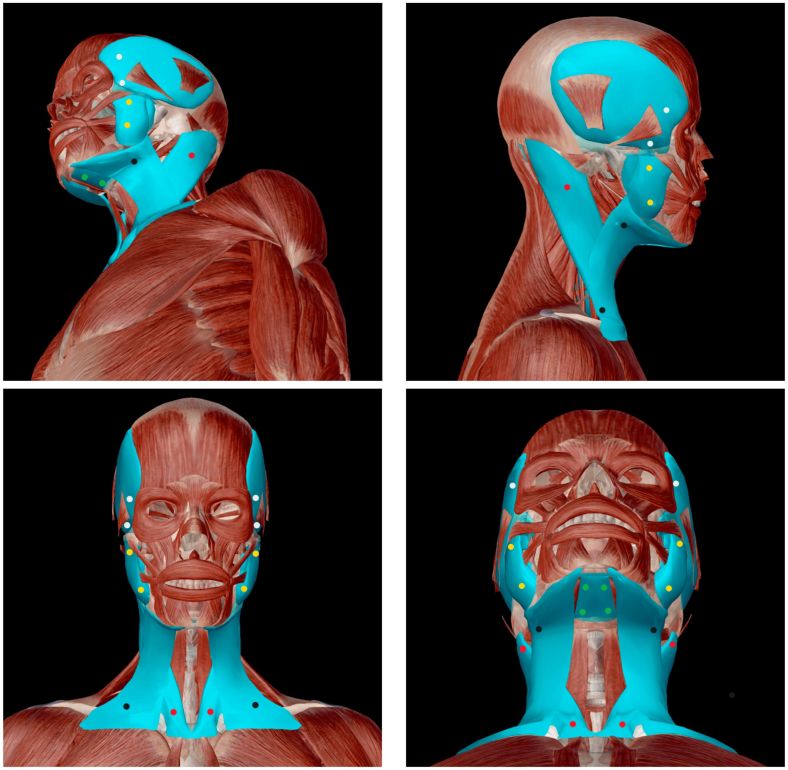
Attraverso lo studio della biomeccanica e delle proprietà viscoelastiche, i risultati rivelano l’importanza del tono muscolare e delle connessioni tra nodi specifici nel modello di rete anatomica composto da 20 nodi e 17 collegamenti.
La ricerca offre un approccio sistemico e quantitativo che arricchisce la comprensione di questi disturbi, andando oltre le osservazioni cliniche e i sintomi dei pazienti.

Campi, G.; Ricci, A.; Costa, N.; Genovesi, F.; Branca, J.J.V.; Paternostro, F.; Della Posta, D. Dynamic Correlations and Disorder in the Masticatory Musculature Network. Life 2023, 13, 2107. https://doi.org/10.3390/life13112107

Abstract

Background: Temporomandibular joint (TMJ) disorders, which affect millions of people worldwide, have multiple etiological factors that make an accurate diagnosis and effective treatments difficult. As a consequence, the gold standard diagnostic criteria for TMJ disorders remain elusive and often depend on subjective decisions.
Aim: In this context, the lack of a non-invasive quantitative methodology capable of assessing the functional physiological state and, consequently, identifying risk indicators for the early diagnosis of TMJ disorders must be tackled and resolved. Methodology: In this work, we have studied the biomechanics and viscoelastic properties of the functional masticatory system by a non-invasive approach involving 52 healthy subjects, analysed by statistical–physics analysis applied to myotonic measurements on specific points of the masticatory system designing a TMJ network composed of 17 nodes and 20 links.
Results: We find that the muscle tone and viscoelasticity of a specific cycle linking frontal, temporal, and mandibular nodes of the network play a prominent role in the physiological functionality of the system. At the same time, the functional state is characterised by a landscape of nearly degenerated levels of elasticity in all links of the network, making this parameter critically distributed and deviating from normal behaviour.
Conclusions: Time evolution and dynamic correlations between biomechanics and viscoelastic parameters measured on the different cycles of the network provide a quantitative framework associated with the functional state of the masticatory system. Our results are expected to contribute to enriching the taxonomy of this system, primarily based on clinical observations, patient symptoms, and expert consensus.

OPEN ACCESS ARTICLE

Modularity of the Human Musculoskeletal System: The Correlation between Functional Structures by Computer Tools Analysis

Per comprendere il concetto tensegrità possiamo pensare a una struttura meccanica costituita da elementi discreti e distinti sottoposti a forze di compressione e da elementi continui sottoposti a sforzi di tensione. Lo sviluppo della teoria della tensegrità si è avuto inizialmente nell’architettura, in seguito nell’arte e poi nella biologia e nella fisiologia, quando si sono prodotte o si sono interpretate strutture che si autosostengono per effetto di uno stato di tensione presente nel sistema (da cui il nome di tensegrity, dalla fusione di tension e integrity).
Come descritto da Levin (1982), il corpo rappresenta un involucro in tensione, le cui porzioni contrapposte, sono mantenute tali dalla compressione degli elementi interni, immersi, fluttuanti, in una rete in continua tensione. Il sistema che si viene a creare è, considerando il corpo come un qualcosa di dinamico, un sistema modificabile in maniera molto evidente per quanto riguarda la sua parte elastica (elementi di tensione) e in maniera minima riguardo la componente in compressione (ossa).
L’articolo che qui vi propongo mira, tra l’altro, a realizzare un quadro completo del modello tensegrile umano, la cui complessità è analizzata attraverso software capaci di analizzare dettagliatamente i sistemi delle reti.

Della Posta, D.; Branca ,J.J.V.; Guarnieri, G.; Veltro, C.; Pacini, A.; Paternostro, F.

Modularity of the Human Musculoskeletal System: The Correlation between Functional Structures by Computer Tools
Analysis. Life 2022, 12, 1186.
https://doi.org/10.3390/   life12081186
https://www.mdpi.com/2075-1729/12/8/1186

Abstract: Introduction: For many years, anatomical studies have been conducted with a shattered view of the body. Although the study of the different apparatuses provides a systemic view of the human body, the reconstruction of the complex network of anatomical structures is crucial for the understanding of structural and functional integration. Aim: We used network analysis to investigate the connection between the whole-body osteo-myofascial structures of the human musculoskeletal system.

Materials and Methods: The musculoskeletal network was performed using the aNETomy® anatomical network with the implementation of the open-source software Cytoscape for data entry.

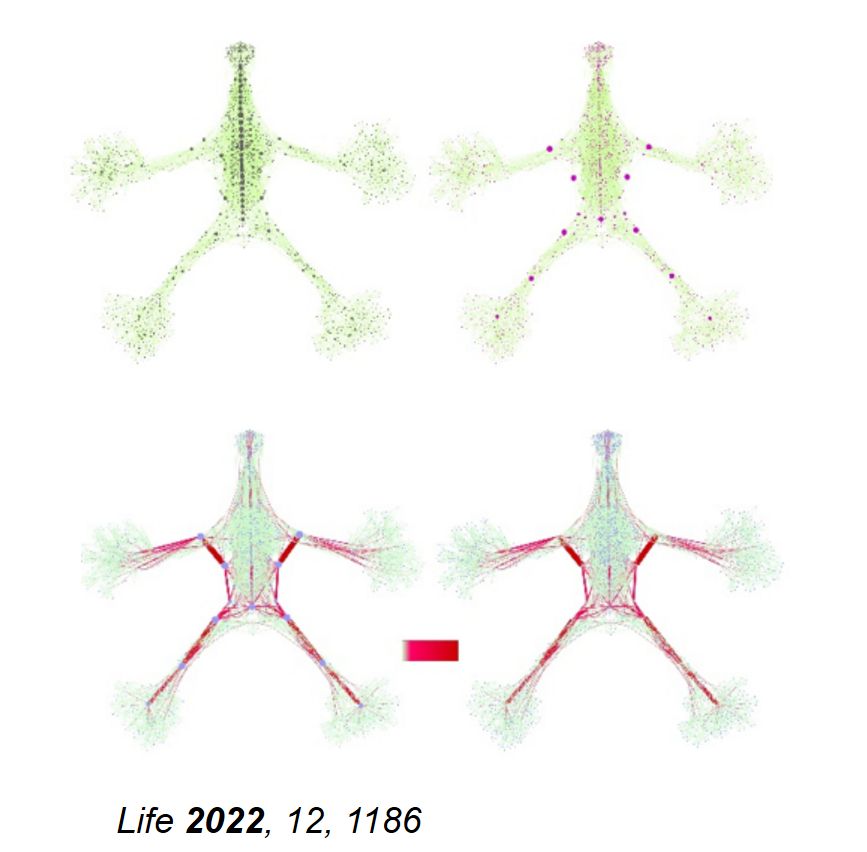
Results: The initial graph was applied with a network consisting of 2298 body parts (nodes) and 7294 links, representing the musculoskeletal system. Considering the same weighted and unweighted osteo-myofascial network, a different distribution was obtained, suggesting both a topological organization and functional behavior of the network structure.

Conclusions: Overall, we provide a deeply detailed anatomical network map of the whole-body musculoskeletal system that can be a useful tool for the comprehensive understanding of every single structure within the complex morphological organization, which could be of particular interest in the study of rehabilitation of movement dysfunctions.